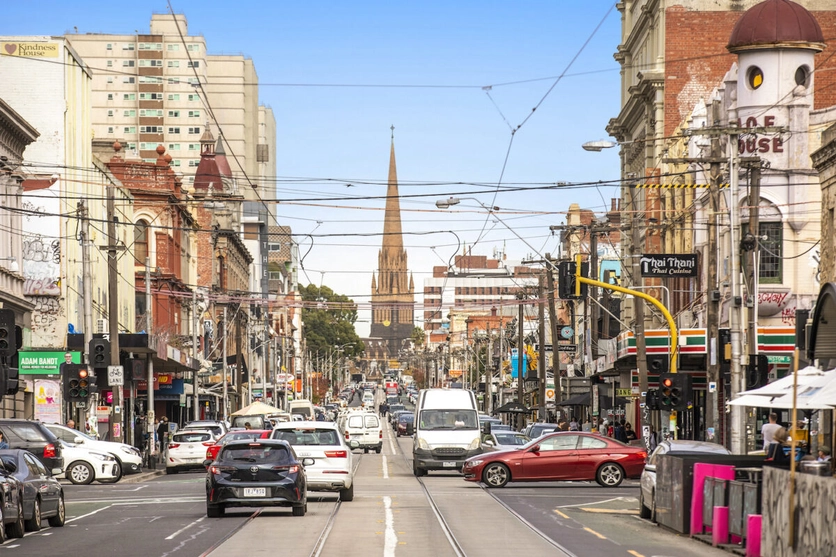
Key performance indicators for Melbourne’s famous shopping strips are emerging, as the strips move further through a period of renewal and demonstrate a tremendous resilience in the face of planning uncertainties and increased cost-of-living.Vacancies along the shopping strips increased slightly over the past year, from a near-historic low 6.5% to 7.2% currently, according to Fitzroys latestWalk the Stripreport, butremain below the long-term average vacancy rateof 7.3%.The FitzroysWalk the Stripreport series has been running since 2017 and is the industry standard for data across Melbourne’s key shopping strips. This year’s edition details the vacancy rates and tenancy make-ups of 37 strips.Fitzroys’ 2025 edition ofWalk the Stripshowed:Anew set key performance indicatorsare providing the secrets to a successful shopping strip.Food and beveragecontinued to be the most prominent sector in terms of enquiry and leases, and was steady as a proportion of Melbourne’s strips at 30.9%.Service retailreduced from 28.1% to 27.0%.Specialty retaildecreased slightly to 33.4%, while continuing to account for the highest proportion of Melbourne’s strips by sector.The proportion ofdevelopment sitesmore than doubled to 1.5% as the strips continued a period of renewal.“Strips with each of an evenly balanced tenancy mix, with at least one major supermarket, combined with commercial or residential development activity, and solid transport accessibility are performing strongly,” said Fitzroys Division Director – Retail Leasing James Lockwood.“Among the best examples have beenPuckle Street, Moonee PondsandGlen Huntly Road, Elsternwick, which tick the boxes on each of these indicators, resulting in extremely low vacancy,” he said.“Strips with close to a one-third split between specialty retail, services, and food and beverage have been the standouts. These strips offer a more comprehensive one-stop experience for shoppers, who can buy their groceries, meet for a coffee, visit the gym, get a haircut, and purchase a new fashion garment all in the same trip.”As well asPuckle StreetandGlen Huntly Road, other strong-performing strips over the past year with even tenancy mixes includeCentre Road, Bentleigh;Clarendon Street, South Melbourne;Glenferrie Road, Hawthorn;Glenferrie Road, Malvern;Hampton Street,Hampton;High Street, Northcote;Toorak Road, South Yarra; andWhitehorse Road, Balwyn.All but two of the above listed strips posted a vacancy rate below their own long-term average.At least one major supermarket anchors nearly all these strips, Lockwood noted.“Supermarkets are typically at the core of shopping strip activity – they’re where we get our essentials and are the most-visited offering on a strip, drawing shoppers from a wider catchment than other traders, but can provide a profound spillover in activity.”Centre Road, Bentleighhas been the best example of the pulling power of supermarkets. Its Coles, Woolworths and Aldi offering is home to the lowest vacancy rate in Melbourne, at just 1.0%.Accessibility is increasingly a key indicator of strong performance.“Having at least a train line or tram line nearby is very important as public transport usage in Melbourne continues its rebound1, and good surrounding car parking is essential. People are simply more likely to visit a strip when getting there is hassle-free,” Lockwood said.He said residential and commercial developments are boosting the immediate catchments of strips through all hours, tipping the sheer weight-of-numbers of visitors and combined spending power in favour of strips and their traders.Resilience and renewal“Melbourne’s strips are demonstrating a tremendous resilience,” Lockwood said.“In the face of planning uncertainties, and a cost-of-living pressures, strip vacancies remain below their long-term average.“The post-COVID years have seen fundamental shifts in Melburnians’ lifestyles, which are supporting trade along the city’s shopping strips. Working from home has meant we are spending more time than ever in our shopping strips, which is offsetting the impact of cost-of-living challenges.“Our shopping strips remain our favourite places to connect with the community. Melbourne gravitates towards its strips.”Lockwood said Melbourne’s strips are continuing to evolve, with new developments on and around the strips reshaping them.In the coming years there is the $3.75 billion transformation of The Jam Factory onChapel Street, South Yarrainto a mixed-use precinct with residential towers, offices, new retail, hospitality, and cinema complex, and 5-star and boutique hotels; meanwhile, multiple medium-rise residential, office and developments approved forBridge Road, Richmondwill give the struggling strip a boost.Puckle Streetis the current poster child for the positive impacts of intensive development on a shopping strip. It is at the very heart of the current generational development and population boom in Moonee Ponds, with some 2,000 apartments in the surrounds to go with newly completed major residential developments such as Penny Lane, while the $2 billion overhaul of Moonee Valley Racecourse is underway and will ultimately add thousands more residents to the immediate catchment.Previous ArticleNext Article
Key performance indicators for Melbourne’s famous shopping strips are emerging, as the strips move further through a period of renewal and demonstrate a tremendous resilience in the face of planning uncertainties and increased cost-of-living.Vacancies along the shopping strips increased slightly over the past year, from a near-historic low 6.5% to 7.2% currently, according to Fitzroys latestWalk the Stripreport, butremain below the long-term average vacancy rateof 7.3%.The FitzroysWalk the Stripreport series has been running since 2017 and is the industry standard for data across Melbourne’s key shopping strips. This year’s edition details the vacancy rates and tenancy make-ups of 37 strips.Fitzroys’ 2025 edition ofWalk the Stripshowed:Anew set key performance indicatorsare providing the secrets to a successful shopping strip.Food and beveragecontinued to be the most prominent sector in terms of enquiry and leases, and was steady as a proportion of Melbourne’s strips at 30.9%.Service retailreduced from 28.1% to 27.0%.Specialty retaildecreased slightly to 33.4%, while continuing to account for the highest proportion of Melbourne’s strips by sector.The proportion ofdevelopment sitesmore than doubled to 1.5% as the strips continued a period of renewal.“Strips with each of an evenly balanced tenancy mix, with at least one major supermarket, combined with commercial or residential development activity, and solid transport accessibility are performing strongly,” said Fitzroys Division Director – Retail Leasing James Lockwood.“Among the best examples have beenPuckle Street, Moonee PondsandGlen Huntly Road, Elsternwick, which tick the boxes on each of these indicators, resulting in extremely low vacancy,” he said.“Strips with close to a one-third split between specialty retail, services, and food and beverage have been the standouts. These strips offer a more comprehensive one-stop experience for shoppers, who can buy their groceries, meet for a coffee, visit the gym, get a haircut, and purchase a new fashion garment all in the same trip.”As well asPuckle StreetandGlen Huntly Road, other strong-performing strips over the past year with even tenancy mixes includeCentre Road, Bentleigh;Clarendon Street, South Melbourne;Glenferrie Road, Hawthorn;Glenferrie Road, Malvern;Hampton Street,Hampton;High Street, Northcote;Toorak Road, South Yarra; andWhitehorse Road, Balwyn.All but two of the above listed strips posted a vacancy rate below their own long-term average.At least one major supermarket anchors nearly all these strips, Lockwood noted.“Supermarkets are typically at the core of shopping strip activity – they’re where we get our essentials and are the most-visited offering on a strip, drawing shoppers from a wider catchment than other traders, but can provide a profound spillover in activity.”Centre Road, Bentleighhas been the best example of the pulling power of supermarkets. Its Coles, Woolworths and Aldi offering is home to the lowest vacancy rate in Melbourne, at just 1.0%.Accessibility is increasingly a key indicator of strong performance.“Having at least a train line or tram line nearby is very important as public transport usage in Melbourne continues its rebound1, and good surrounding car parking is essential. People are simply more likely to visit a strip when getting there is hassle-free,” Lockwood said.He said residential and commercial developments are boosting the immediate catchments of strips through all hours, tipping the sheer weight-of-numbers of visitors and combined spending power in favour of strips and their traders.Resilience and renewal“Melbourne’s strips are demonstrating a tremendous resilience,” Lockwood said.“In the face of planning uncertainties, and a cost-of-living pressures, strip vacancies remain below their long-term average.“The post-COVID years have seen fundamental shifts in Melburnians’ lifestyles, which are supporting trade along the city’s shopping strips. Working from home has meant we are spending more time than ever in our shopping strips, which is offsetting the impact of cost-of-living challenges.“Our shopping strips remain our favourite places to connect with the community. Melbourne gravitates towards its strips.”Lockwood said Melbourne’s strips are continuing to evolve, with new developments on and around the strips reshaping them.In the coming years there is the $3.75 billion transformation of The Jam Factory onChapel Street, South Yarrainto a mixed-use precinct with residential towers, offices, new retail, hospitality, and cinema complex, and 5-star and boutique hotels; meanwhile, multiple medium-rise residential, office and developments approved forBridge Road, Richmondwill give the struggling strip a boost.Puckle Streetis the current poster child for the positive impacts of intensive development on a shopping strip. It is at the very heart of the current generational development and population boom in Moonee Ponds, with some 2,000 apartments in the surrounds to go with newly completed major residential developments such as Penny Lane, while the $2 billion overhaul of Moonee Valley Racecourse is underway and will ultimately add thousands more residents to the immediate catchment.Previous ArticleNext Article
Vacancies along the shopping strips increased slightly over the past year, from a near-historic low 6.5% to 7.2% currently, according to Fitzroys latestWalk the Stripreport, butremain below the long-term average vacancy rateof 7.3%.The FitzroysWalk the Stripreport series has been running since 2017 and is the industry standard for data across Melbourne’s key shopping strips. This year’s edition details the vacancy rates and tenancy make-ups of 37 strips.Fitzroys’ 2025 edition ofWalk the Stripshowed:Anew set key performance indicatorsare providing the secrets to a successful shopping strip.Food and beveragecontinued to be the most prominent sector in terms of enquiry and leases, and was steady as a proportion of Melbourne’s strips at 30.9%.Service retailreduced from 28.1% to 27.0%.Specialty retaildecreased slightly to 33.4%, while continuing to account for the highest proportion of Melbourne’s strips by sector.The proportion ofdevelopment sitesmore than doubled to 1.5% as the strips continued a period of renewal.“Strips with each of an evenly balanced tenancy mix, with at least one major supermarket, combined with commercial or residential development activity, and solid transport accessibility are performing strongly,” said Fitzroys Division Director – Retail Leasing James Lockwood.“Among the best examples have beenPuckle Street, Moonee PondsandGlen Huntly Road, Elsternwick, which tick the boxes on each of these indicators, resulting in extremely low vacancy,” he said.“Strips with close to a one-third split between specialty retail, services, and food and beverage have been the standouts. These strips offer a more comprehensive one-stop experience for shoppers, who can buy their groceries, meet for a coffee, visit the gym, get a haircut, and purchase a new fashion garment all in the same trip.”As well asPuckle StreetandGlen Huntly Road, other strong-performing strips over the past year with even tenancy mixes includeCentre Road, Bentleigh;Clarendon Street, South Melbourne;Glenferrie Road, Hawthorn;Glenferrie Road, Malvern;Hampton Street,Hampton;High Street, Northcote;Toorak Road, South Yarra; andWhitehorse Road, Balwyn.All but two of the above listed strips posted a vacancy rate below their own long-term average.At least one major supermarket anchors nearly all these strips, Lockwood noted.“Supermarkets are typically at the core of shopping strip activity – they’re where we get our essentials and are the most-visited offering on a strip, drawing shoppers from a wider catchment than other traders, but can provide a profound spillover in activity.”Centre Road, Bentleighhas been the best example of the pulling power of supermarkets. Its Coles, Woolworths and Aldi offering is home to the lowest vacancy rate in Melbourne, at just 1.0%.Accessibility is increasingly a key indicator of strong performance.“Having at least a train line or tram line nearby is very important as public transport usage in Melbourne continues its rebound1, and good surrounding car parking is essential. People are simply more likely to visit a strip when getting there is hassle-free,” Lockwood said.He said residential and commercial developments are boosting the immediate catchments of strips through all hours, tipping the sheer weight-of-numbers of visitors and combined spending power in favour of strips and their traders.Resilience and renewal“Melbourne’s strips are demonstrating a tremendous resilience,” Lockwood said.“In the face of planning uncertainties, and a cost-of-living pressures, strip vacancies remain below their long-term average.“The post-COVID years have seen fundamental shifts in Melburnians’ lifestyles, which are supporting trade along the city’s shopping strips. Working from home has meant we are spending more time than ever in our shopping strips, which is offsetting the impact of cost-of-living challenges.“Our shopping strips remain our favourite places to connect with the community. Melbourne gravitates towards its strips.”Lockwood said Melbourne’s strips are continuing to evolve, with new developments on and around the strips reshaping them.In the coming years there is the $3.75 billion transformation of The Jam Factory onChapel Street, South Yarrainto a mixed-use precinct with residential towers, offices, new retail, hospitality, and cinema complex, and 5-star and boutique hotels; meanwhile, multiple medium-rise residential, office and developments approved forBridge Road, Richmondwill give the struggling strip a boost.Puckle Streetis the current poster child for the positive impacts of intensive development on a shopping strip. It is at the very heart of the current generational development and population boom in Moonee Ponds, with some 2,000 apartments in the surrounds to go with newly completed major residential developments such as Penny Lane, while the $2 billion overhaul of Moonee Valley Racecourse is underway and will ultimately add thousands more residents to the immediate catchment.Previous ArticleNext Article
The FitzroysWalk the Stripreport series has been running since 2017 and is the industry standard for data across Melbourne’s key shopping strips. This year’s edition details the vacancy rates and tenancy make-ups of 37 strips.Fitzroys’ 2025 edition ofWalk the Stripshowed:Anew set key performance indicatorsare providing the secrets to a successful shopping strip.Food and beveragecontinued to be the most prominent sector in terms of enquiry and leases, and was steady as a proportion of Melbourne’s strips at 30.9%.Service retailreduced from 28.1% to 27.0%.Specialty retaildecreased slightly to 33.4%, while continuing to account for the highest proportion of Melbourne’s strips by sector.The proportion ofdevelopment sitesmore than doubled to 1.5% as the strips continued a period of renewal.“Strips with each of an evenly balanced tenancy mix, with at least one major supermarket, combined with commercial or residential development activity, and solid transport accessibility are performing strongly,” said Fitzroys Division Director – Retail Leasing James Lockwood.“Among the best examples have beenPuckle Street, Moonee PondsandGlen Huntly Road, Elsternwick, which tick the boxes on each of these indicators, resulting in extremely low vacancy,” he said.“Strips with close to a one-third split between specialty retail, services, and food and beverage have been the standouts. These strips offer a more comprehensive one-stop experience for shoppers, who can buy their groceries, meet for a coffee, visit the gym, get a haircut, and purchase a new fashion garment all in the same trip.”As well asPuckle StreetandGlen Huntly Road, other strong-performing strips over the past year with even tenancy mixes includeCentre Road, Bentleigh;Clarendon Street, South Melbourne;Glenferrie Road, Hawthorn;Glenferrie Road, Malvern;Hampton Street,Hampton;High Street, Northcote;Toorak Road, South Yarra; andWhitehorse Road, Balwyn.All but two of the above listed strips posted a vacancy rate below their own long-term average.At least one major supermarket anchors nearly all these strips, Lockwood noted.“Supermarkets are typically at the core of shopping strip activity – they’re where we get our essentials and are the most-visited offering on a strip, drawing shoppers from a wider catchment than other traders, but can provide a profound spillover in activity.”Centre Road, Bentleighhas been the best example of the pulling power of supermarkets. Its Coles, Woolworths and Aldi offering is home to the lowest vacancy rate in Melbourne, at just 1.0%.Accessibility is increasingly a key indicator of strong performance.“Having at least a train line or tram line nearby is very important as public transport usage in Melbourne continues its rebound1, and good surrounding car parking is essential. People are simply more likely to visit a strip when getting there is hassle-free,” Lockwood said.He said residential and commercial developments are boosting the immediate catchments of strips through all hours, tipping the sheer weight-of-numbers of visitors and combined spending power in favour of strips and their traders.Resilience and renewal“Melbourne’s strips are demonstrating a tremendous resilience,” Lockwood said.“In the face of planning uncertainties, and a cost-of-living pressures, strip vacancies remain below their long-term average.“The post-COVID years have seen fundamental shifts in Melburnians’ lifestyles, which are supporting trade along the city’s shopping strips. Working from home has meant we are spending more time than ever in our shopping strips, which is offsetting the impact of cost-of-living challenges.“Our shopping strips remain our favourite places to connect with the community. Melbourne gravitates towards its strips.”Lockwood said Melbourne’s strips are continuing to evolve, with new developments on and around the strips reshaping them.In the coming years there is the $3.75 billion transformation of The Jam Factory onChapel Street, South Yarrainto a mixed-use precinct with residential towers, offices, new retail, hospitality, and cinema complex, and 5-star and boutique hotels; meanwhile, multiple medium-rise residential, office and developments approved forBridge Road, Richmondwill give the struggling strip a boost.Puckle Streetis the current poster child for the positive impacts of intensive development on a shopping strip. It is at the very heart of the current generational development and population boom in Moonee Ponds, with some 2,000 apartments in the surrounds to go with newly completed major residential developments such as Penny Lane, while the $2 billion overhaul of Moonee Valley Racecourse is underway and will ultimately add thousands more residents to the immediate catchment.Previous ArticleNext Article
Fitzroys’ 2025 edition ofWalk the Stripshowed:Anew set key performance indicatorsare providing the secrets to a successful shopping strip.Food and beveragecontinued to be the most prominent sector in terms of enquiry and leases, and was steady as a proportion of Melbourne’s strips at 30.9%.Service retailreduced from 28.1% to 27.0%.Specialty retaildecreased slightly to 33.4%, while continuing to account for the highest proportion of Melbourne’s strips by sector.The proportion ofdevelopment sitesmore than doubled to 1.5% as the strips continued a period of renewal.“Strips with each of an evenly balanced tenancy mix, with at least one major supermarket, combined with commercial or residential development activity, and solid transport accessibility are performing strongly,” said Fitzroys Division Director – Retail Leasing James Lockwood.“Among the best examples have beenPuckle Street, Moonee PondsandGlen Huntly Road, Elsternwick, which tick the boxes on each of these indicators, resulting in extremely low vacancy,” he said.“Strips with close to a one-third split between specialty retail, services, and food and beverage have been the standouts. These strips offer a more comprehensive one-stop experience for shoppers, who can buy their groceries, meet for a coffee, visit the gym, get a haircut, and purchase a new fashion garment all in the same trip.”As well asPuckle StreetandGlen Huntly Road, other strong-performing strips over the past year with even tenancy mixes includeCentre Road, Bentleigh;Clarendon Street, South Melbourne;Glenferrie Road, Hawthorn;Glenferrie Road, Malvern;Hampton Street,Hampton;High Street, Northcote;Toorak Road, South Yarra; andWhitehorse Road, Balwyn.All but two of the above listed strips posted a vacancy rate below their own long-term average.At least one major supermarket anchors nearly all these strips, Lockwood noted.“Supermarkets are typically at the core of shopping strip activity – they’re where we get our essentials and are the most-visited offering on a strip, drawing shoppers from a wider catchment than other traders, but can provide a profound spillover in activity.”Centre Road, Bentleighhas been the best example of the pulling power of supermarkets. Its Coles, Woolworths and Aldi offering is home to the lowest vacancy rate in Melbourne, at just 1.0%.Accessibility is increasingly a key indicator of strong performance.“Having at least a train line or tram line nearby is very important as public transport usage in Melbourne continues its rebound1, and good surrounding car parking is essential. People are simply more likely to visit a strip when getting there is hassle-free,” Lockwood said.He said residential and commercial developments are boosting the immediate catchments of strips through all hours, tipping the sheer weight-of-numbers of visitors and combined spending power in favour of strips and their traders.Resilience and renewal“Melbourne’s strips are demonstrating a tremendous resilience,” Lockwood said.“In the face of planning uncertainties, and a cost-of-living pressures, strip vacancies remain below their long-term average.“The post-COVID years have seen fundamental shifts in Melburnians’ lifestyles, which are supporting trade along the city’s shopping strips. Working from home has meant we are spending more time than ever in our shopping strips, which is offsetting the impact of cost-of-living challenges.“Our shopping strips remain our favourite places to connect with the community. Melbourne gravitates towards its strips.”Lockwood said Melbourne’s strips are continuing to evolve, with new developments on and around the strips reshaping them.In the coming years there is the $3.75 billion transformation of The Jam Factory onChapel Street, South Yarrainto a mixed-use precinct with residential towers, offices, new retail, hospitality, and cinema complex, and 5-star and boutique hotels; meanwhile, multiple medium-rise residential, office and developments approved forBridge Road, Richmondwill give the struggling strip a boost.Puckle Streetis the current poster child for the positive impacts of intensive development on a shopping strip. It is at the very heart of the current generational development and population boom in Moonee Ponds, with some 2,000 apartments in the surrounds to go with newly completed major residential developments such as Penny Lane, while the $2 billion overhaul of Moonee Valley Racecourse is underway and will ultimately add thousands more residents to the immediate catchment.Previous ArticleNext Article
“Strips with each of an evenly balanced tenancy mix, with at least one major supermarket, combined with commercial or residential development activity, and solid transport accessibility are performing strongly,” said Fitzroys Division Director – Retail Leasing James Lockwood.“Among the best examples have beenPuckle Street, Moonee PondsandGlen Huntly Road, Elsternwick, which tick the boxes on each of these indicators, resulting in extremely low vacancy,” he said.“Strips with close to a one-third split between specialty retail, services, and food and beverage have been the standouts. These strips offer a more comprehensive one-stop experience for shoppers, who can buy their groceries, meet for a coffee, visit the gym, get a haircut, and purchase a new fashion garment all in the same trip.”As well asPuckle StreetandGlen Huntly Road, other strong-performing strips over the past year with even tenancy mixes includeCentre Road, Bentleigh;Clarendon Street, South Melbourne;Glenferrie Road, Hawthorn;Glenferrie Road, Malvern;Hampton Street,Hampton;High Street, Northcote;Toorak Road, South Yarra; andWhitehorse Road, Balwyn.All but two of the above listed strips posted a vacancy rate below their own long-term average.At least one major supermarket anchors nearly all these strips, Lockwood noted.“Supermarkets are typically at the core of shopping strip activity – they’re where we get our essentials and are the most-visited offering on a strip, drawing shoppers from a wider catchment than other traders, but can provide a profound spillover in activity.”Centre Road, Bentleighhas been the best example of the pulling power of supermarkets. Its Coles, Woolworths and Aldi offering is home to the lowest vacancy rate in Melbourne, at just 1.0%.Accessibility is increasingly a key indicator of strong performance.“Having at least a train line or tram line nearby is very important as public transport usage in Melbourne continues its rebound1, and good surrounding car parking is essential. People are simply more likely to visit a strip when getting there is hassle-free,” Lockwood said.He said residential and commercial developments are boosting the immediate catchments of strips through all hours, tipping the sheer weight-of-numbers of visitors and combined spending power in favour of strips and their traders.Resilience and renewal“Melbourne’s strips are demonstrating a tremendous resilience,” Lockwood said.“In the face of planning uncertainties, and a cost-of-living pressures, strip vacancies remain below their long-term average.“The post-COVID years have seen fundamental shifts in Melburnians’ lifestyles, which are supporting trade along the city’s shopping strips. Working from home has meant we are spending more time than ever in our shopping strips, which is offsetting the impact of cost-of-living challenges.“Our shopping strips remain our favourite places to connect with the community. Melbourne gravitates towards its strips.”Lockwood said Melbourne’s strips are continuing to evolve, with new developments on and around the strips reshaping them.In the coming years there is the $3.75 billion transformation of The Jam Factory onChapel Street, South Yarrainto a mixed-use precinct with residential towers, offices, new retail, hospitality, and cinema complex, and 5-star and boutique hotels; meanwhile, multiple medium-rise residential, office and developments approved forBridge Road, Richmondwill give the struggling strip a boost.Puckle Streetis the current poster child for the positive impacts of intensive development on a shopping strip. It is at the very heart of the current generational development and population boom in Moonee Ponds, with some 2,000 apartments in the surrounds to go with newly completed major residential developments such as Penny Lane, while the $2 billion overhaul of Moonee Valley Racecourse is underway and will ultimately add thousands more residents to the immediate catchment.Previous ArticleNext Article
“Among the best examples have beenPuckle Street, Moonee PondsandGlen Huntly Road, Elsternwick, which tick the boxes on each of these indicators, resulting in extremely low vacancy,” he said.“Strips with close to a one-third split between specialty retail, services, and food and beverage have been the standouts. These strips offer a more comprehensive one-stop experience for shoppers, who can buy their groceries, meet for a coffee, visit the gym, get a haircut, and purchase a new fashion garment all in the same trip.”As well asPuckle StreetandGlen Huntly Road, other strong-performing strips over the past year with even tenancy mixes includeCentre Road, Bentleigh;Clarendon Street, South Melbourne;Glenferrie Road, Hawthorn;Glenferrie Road, Malvern;Hampton Street,Hampton;High Street, Northcote;Toorak Road, South Yarra; andWhitehorse Road, Balwyn.All but two of the above listed strips posted a vacancy rate below their own long-term average.At least one major supermarket anchors nearly all these strips, Lockwood noted.“Supermarkets are typically at the core of shopping strip activity – they’re where we get our essentials and are the most-visited offering on a strip, drawing shoppers from a wider catchment than other traders, but can provide a profound spillover in activity.”Centre Road, Bentleighhas been the best example of the pulling power of supermarkets. Its Coles, Woolworths and Aldi offering is home to the lowest vacancy rate in Melbourne, at just 1.0%.Accessibility is increasingly a key indicator of strong performance.“Having at least a train line or tram line nearby is very important as public transport usage in Melbourne continues its rebound1, and good surrounding car parking is essential. People are simply more likely to visit a strip when getting there is hassle-free,” Lockwood said.He said residential and commercial developments are boosting the immediate catchments of strips through all hours, tipping the sheer weight-of-numbers of visitors and combined spending power in favour of strips and their traders.Resilience and renewal“Melbourne’s strips are demonstrating a tremendous resilience,” Lockwood said.“In the face of planning uncertainties, and a cost-of-living pressures, strip vacancies remain below their long-term average.“The post-COVID years have seen fundamental shifts in Melburnians’ lifestyles, which are supporting trade along the city’s shopping strips. Working from home has meant we are spending more time than ever in our shopping strips, which is offsetting the impact of cost-of-living challenges.“Our shopping strips remain our favourite places to connect with the community. Melbourne gravitates towards its strips.”Lockwood said Melbourne’s strips are continuing to evolve, with new developments on and around the strips reshaping them.In the coming years there is the $3.75 billion transformation of The Jam Factory onChapel Street, South Yarrainto a mixed-use precinct with residential towers, offices, new retail, hospitality, and cinema complex, and 5-star and boutique hotels; meanwhile, multiple medium-rise residential, office and developments approved forBridge Road, Richmondwill give the struggling strip a boost.Puckle Streetis the current poster child for the positive impacts of intensive development on a shopping strip. It is at the very heart of the current generational development and population boom in Moonee Ponds, with some 2,000 apartments in the surrounds to go with newly completed major residential developments such as Penny Lane, while the $2 billion overhaul of Moonee Valley Racecourse is underway and will ultimately add thousands more residents to the immediate catchment.Previous ArticleNext Article
“Strips with close to a one-third split between specialty retail, services, and food and beverage have been the standouts. These strips offer a more comprehensive one-stop experience for shoppers, who can buy their groceries, meet for a coffee, visit the gym, get a haircut, and purchase a new fashion garment all in the same trip.”As well asPuckle StreetandGlen Huntly Road, other strong-performing strips over the past year with even tenancy mixes includeCentre Road, Bentleigh;Clarendon Street, South Melbourne;Glenferrie Road, Hawthorn;Glenferrie Road, Malvern;Hampton Street,Hampton;High Street, Northcote;Toorak Road, South Yarra; andWhitehorse Road, Balwyn.All but two of the above listed strips posted a vacancy rate below their own long-term average.At least one major supermarket anchors nearly all these strips, Lockwood noted.“Supermarkets are typically at the core of shopping strip activity – they’re where we get our essentials and are the most-visited offering on a strip, drawing shoppers from a wider catchment than other traders, but can provide a profound spillover in activity.”Centre Road, Bentleighhas been the best example of the pulling power of supermarkets. Its Coles, Woolworths and Aldi offering is home to the lowest vacancy rate in Melbourne, at just 1.0%.Accessibility is increasingly a key indicator of strong performance.“Having at least a train line or tram line nearby is very important as public transport usage in Melbourne continues its rebound1, and good surrounding car parking is essential. People are simply more likely to visit a strip when getting there is hassle-free,” Lockwood said.He said residential and commercial developments are boosting the immediate catchments of strips through all hours, tipping the sheer weight-of-numbers of visitors and combined spending power in favour of strips and their traders.Resilience and renewal“Melbourne’s strips are demonstrating a tremendous resilience,” Lockwood said.“In the face of planning uncertainties, and a cost-of-living pressures, strip vacancies remain below their long-term average.“The post-COVID years have seen fundamental shifts in Melburnians’ lifestyles, which are supporting trade along the city’s shopping strips. Working from home has meant we are spending more time than ever in our shopping strips, which is offsetting the impact of cost-of-living challenges.“Our shopping strips remain our favourite places to connect with the community. Melbourne gravitates towards its strips.”Lockwood said Melbourne’s strips are continuing to evolve, with new developments on and around the strips reshaping them.In the coming years there is the $3.75 billion transformation of The Jam Factory onChapel Street, South Yarrainto a mixed-use precinct with residential towers, offices, new retail, hospitality, and cinema complex, and 5-star and boutique hotels; meanwhile, multiple medium-rise residential, office and developments approved forBridge Road, Richmondwill give the struggling strip a boost.Puckle Streetis the current poster child for the positive impacts of intensive development on a shopping strip. It is at the very heart of the current generational development and population boom in Moonee Ponds, with some 2,000 apartments in the surrounds to go with newly completed major residential developments such as Penny Lane, while the $2 billion overhaul of Moonee Valley Racecourse is underway and will ultimately add thousands more residents to the immediate catchment.Previous ArticleNext Article
As well asPuckle StreetandGlen Huntly Road, other strong-performing strips over the past year with even tenancy mixes includeCentre Road, Bentleigh;Clarendon Street, South Melbourne;Glenferrie Road, Hawthorn;Glenferrie Road, Malvern;Hampton Street,Hampton;High Street, Northcote;Toorak Road, South Yarra; andWhitehorse Road, Balwyn.All but two of the above listed strips posted a vacancy rate below their own long-term average.At least one major supermarket anchors nearly all these strips, Lockwood noted.“Supermarkets are typically at the core of shopping strip activity – they’re where we get our essentials and are the most-visited offering on a strip, drawing shoppers from a wider catchment than other traders, but can provide a profound spillover in activity.”Centre Road, Bentleighhas been the best example of the pulling power of supermarkets. Its Coles, Woolworths and Aldi offering is home to the lowest vacancy rate in Melbourne, at just 1.0%.Accessibility is increasingly a key indicator of strong performance.“Having at least a train line or tram line nearby is very important as public transport usage in Melbourne continues its rebound1, and good surrounding car parking is essential. People are simply more likely to visit a strip when getting there is hassle-free,” Lockwood said.He said residential and commercial developments are boosting the immediate catchments of strips through all hours, tipping the sheer weight-of-numbers of visitors and combined spending power in favour of strips and their traders.Resilience and renewal“Melbourne’s strips are demonstrating a tremendous resilience,” Lockwood said.“In the face of planning uncertainties, and a cost-of-living pressures, strip vacancies remain below their long-term average.“The post-COVID years have seen fundamental shifts in Melburnians’ lifestyles, which are supporting trade along the city’s shopping strips. Working from home has meant we are spending more time than ever in our shopping strips, which is offsetting the impact of cost-of-living challenges.“Our shopping strips remain our favourite places to connect with the community. Melbourne gravitates towards its strips.”Lockwood said Melbourne’s strips are continuing to evolve, with new developments on and around the strips reshaping them.In the coming years there is the $3.75 billion transformation of The Jam Factory onChapel Street, South Yarrainto a mixed-use precinct with residential towers, offices, new retail, hospitality, and cinema complex, and 5-star and boutique hotels; meanwhile, multiple medium-rise residential, office and developments approved forBridge Road, Richmondwill give the struggling strip a boost.Puckle Streetis the current poster child for the positive impacts of intensive development on a shopping strip. It is at the very heart of the current generational development and population boom in Moonee Ponds, with some 2,000 apartments in the surrounds to go with newly completed major residential developments such as Penny Lane, while the $2 billion overhaul of Moonee Valley Racecourse is underway and will ultimately add thousands more residents to the immediate catchment.Previous ArticleNext Article
All but two of the above listed strips posted a vacancy rate below their own long-term average.At least one major supermarket anchors nearly all these strips, Lockwood noted.“Supermarkets are typically at the core of shopping strip activity – they’re where we get our essentials and are the most-visited offering on a strip, drawing shoppers from a wider catchment than other traders, but can provide a profound spillover in activity.”Centre Road, Bentleighhas been the best example of the pulling power of supermarkets. Its Coles, Woolworths and Aldi offering is home to the lowest vacancy rate in Melbourne, at just 1.0%.Accessibility is increasingly a key indicator of strong performance.“Having at least a train line or tram line nearby is very important as public transport usage in Melbourne continues its rebound1, and good surrounding car parking is essential. People are simply more likely to visit a strip when getting there is hassle-free,” Lockwood said.He said residential and commercial developments are boosting the immediate catchments of strips through all hours, tipping the sheer weight-of-numbers of visitors and combined spending power in favour of strips and their traders.Resilience and renewal“Melbourne’s strips are demonstrating a tremendous resilience,” Lockwood said.“In the face of planning uncertainties, and a cost-of-living pressures, strip vacancies remain below their long-term average.“The post-COVID years have seen fundamental shifts in Melburnians’ lifestyles, which are supporting trade along the city’s shopping strips. Working from home has meant we are spending more time than ever in our shopping strips, which is offsetting the impact of cost-of-living challenges.“Our shopping strips remain our favourite places to connect with the community. Melbourne gravitates towards its strips.”Lockwood said Melbourne’s strips are continuing to evolve, with new developments on and around the strips reshaping them.In the coming years there is the $3.75 billion transformation of The Jam Factory onChapel Street, South Yarrainto a mixed-use precinct with residential towers, offices, new retail, hospitality, and cinema complex, and 5-star and boutique hotels; meanwhile, multiple medium-rise residential, office and developments approved forBridge Road, Richmondwill give the struggling strip a boost.Puckle Streetis the current poster child for the positive impacts of intensive development on a shopping strip. It is at the very heart of the current generational development and population boom in Moonee Ponds, with some 2,000 apartments in the surrounds to go with newly completed major residential developments such as Penny Lane, while the $2 billion overhaul of Moonee Valley Racecourse is underway and will ultimately add thousands more residents to the immediate catchment.Previous ArticleNext Article
At least one major supermarket anchors nearly all these strips, Lockwood noted.“Supermarkets are typically at the core of shopping strip activity – they’re where we get our essentials and are the most-visited offering on a strip, drawing shoppers from a wider catchment than other traders, but can provide a profound spillover in activity.”Centre Road, Bentleighhas been the best example of the pulling power of supermarkets. Its Coles, Woolworths and Aldi offering is home to the lowest vacancy rate in Melbourne, at just 1.0%.Accessibility is increasingly a key indicator of strong performance.“Having at least a train line or tram line nearby is very important as public transport usage in Melbourne continues its rebound1, and good surrounding car parking is essential. People are simply more likely to visit a strip when getting there is hassle-free,” Lockwood said.He said residential and commercial developments are boosting the immediate catchments of strips through all hours, tipping the sheer weight-of-numbers of visitors and combined spending power in favour of strips and their traders.Resilience and renewal“Melbourne’s strips are demonstrating a tremendous resilience,” Lockwood said.“In the face of planning uncertainties, and a cost-of-living pressures, strip vacancies remain below their long-term average.“The post-COVID years have seen fundamental shifts in Melburnians’ lifestyles, which are supporting trade along the city’s shopping strips. Working from home has meant we are spending more time than ever in our shopping strips, which is offsetting the impact of cost-of-living challenges.“Our shopping strips remain our favourite places to connect with the community. Melbourne gravitates towards its strips.”Lockwood said Melbourne’s strips are continuing to evolve, with new developments on and around the strips reshaping them.In the coming years there is the $3.75 billion transformation of The Jam Factory onChapel Street, South Yarrainto a mixed-use precinct with residential towers, offices, new retail, hospitality, and cinema complex, and 5-star and boutique hotels; meanwhile, multiple medium-rise residential, office and developments approved forBridge Road, Richmondwill give the struggling strip a boost.Puckle Streetis the current poster child for the positive impacts of intensive development on a shopping strip. It is at the very heart of the current generational development and population boom in Moonee Ponds, with some 2,000 apartments in the surrounds to go with newly completed major residential developments such as Penny Lane, while the $2 billion overhaul of Moonee Valley Racecourse is underway and will ultimately add thousands more residents to the immediate catchment.Previous ArticleNext Article
“Supermarkets are typically at the core of shopping strip activity – they’re where we get our essentials and are the most-visited offering on a strip, drawing shoppers from a wider catchment than other traders, but can provide a profound spillover in activity.”Centre Road, Bentleighhas been the best example of the pulling power of supermarkets. Its Coles, Woolworths and Aldi offering is home to the lowest vacancy rate in Melbourne, at just 1.0%.Accessibility is increasingly a key indicator of strong performance.“Having at least a train line or tram line nearby is very important as public transport usage in Melbourne continues its rebound1, and good surrounding car parking is essential. People are simply more likely to visit a strip when getting there is hassle-free,” Lockwood said.He said residential and commercial developments are boosting the immediate catchments of strips through all hours, tipping the sheer weight-of-numbers of visitors and combined spending power in favour of strips and their traders.Resilience and renewal“Melbourne’s strips are demonstrating a tremendous resilience,” Lockwood said.“In the face of planning uncertainties, and a cost-of-living pressures, strip vacancies remain below their long-term average.“The post-COVID years have seen fundamental shifts in Melburnians’ lifestyles, which are supporting trade along the city’s shopping strips. Working from home has meant we are spending more time than ever in our shopping strips, which is offsetting the impact of cost-of-living challenges.“Our shopping strips remain our favourite places to connect with the community. Melbourne gravitates towards its strips.”Lockwood said Melbourne’s strips are continuing to evolve, with new developments on and around the strips reshaping them.In the coming years there is the $3.75 billion transformation of The Jam Factory onChapel Street, South Yarrainto a mixed-use precinct with residential towers, offices, new retail, hospitality, and cinema complex, and 5-star and boutique hotels; meanwhile, multiple medium-rise residential, office and developments approved forBridge Road, Richmondwill give the struggling strip a boost.Puckle Streetis the current poster child for the positive impacts of intensive development on a shopping strip. It is at the very heart of the current generational development and population boom in Moonee Ponds, with some 2,000 apartments in the surrounds to go with newly completed major residential developments such as Penny Lane, while the $2 billion overhaul of Moonee Valley Racecourse is underway and will ultimately add thousands more residents to the immediate catchment.Previous ArticleNext Article
Centre Road, Bentleighhas been the best example of the pulling power of supermarkets. Its Coles, Woolworths and Aldi offering is home to the lowest vacancy rate in Melbourne, at just 1.0%.Accessibility is increasingly a key indicator of strong performance.“Having at least a train line or tram line nearby is very important as public transport usage in Melbourne continues its rebound1, and good surrounding car parking is essential. People are simply more likely to visit a strip when getting there is hassle-free,” Lockwood said.He said residential and commercial developments are boosting the immediate catchments of strips through all hours, tipping the sheer weight-of-numbers of visitors and combined spending power in favour of strips and their traders.Resilience and renewal“Melbourne’s strips are demonstrating a tremendous resilience,” Lockwood said.“In the face of planning uncertainties, and a cost-of-living pressures, strip vacancies remain below their long-term average.“The post-COVID years have seen fundamental shifts in Melburnians’ lifestyles, which are supporting trade along the city’s shopping strips. Working from home has meant we are spending more time than ever in our shopping strips, which is offsetting the impact of cost-of-living challenges.“Our shopping strips remain our favourite places to connect with the community. Melbourne gravitates towards its strips.”Lockwood said Melbourne’s strips are continuing to evolve, with new developments on and around the strips reshaping them.In the coming years there is the $3.75 billion transformation of The Jam Factory onChapel Street, South Yarrainto a mixed-use precinct with residential towers, offices, new retail, hospitality, and cinema complex, and 5-star and boutique hotels; meanwhile, multiple medium-rise residential, office and developments approved forBridge Road, Richmondwill give the struggling strip a boost.Puckle Streetis the current poster child for the positive impacts of intensive development on a shopping strip. It is at the very heart of the current generational development and population boom in Moonee Ponds, with some 2,000 apartments in the surrounds to go with newly completed major residential developments such as Penny Lane, while the $2 billion overhaul of Moonee Valley Racecourse is underway and will ultimately add thousands more residents to the immediate catchment.Previous ArticleNext Article
Accessibility is increasingly a key indicator of strong performance.“Having at least a train line or tram line nearby is very important as public transport usage in Melbourne continues its rebound1, and good surrounding car parking is essential. People are simply more likely to visit a strip when getting there is hassle-free,” Lockwood said.He said residential and commercial developments are boosting the immediate catchments of strips through all hours, tipping the sheer weight-of-numbers of visitors and combined spending power in favour of strips and their traders.Resilience and renewal“Melbourne’s strips are demonstrating a tremendous resilience,” Lockwood said.“In the face of planning uncertainties, and a cost-of-living pressures, strip vacancies remain below their long-term average.“The post-COVID years have seen fundamental shifts in Melburnians’ lifestyles, which are supporting trade along the city’s shopping strips. Working from home has meant we are spending more time than ever in our shopping strips, which is offsetting the impact of cost-of-living challenges.“Our shopping strips remain our favourite places to connect with the community. Melbourne gravitates towards its strips.”Lockwood said Melbourne’s strips are continuing to evolve, with new developments on and around the strips reshaping them.In the coming years there is the $3.75 billion transformation of The Jam Factory onChapel Street, South Yarrainto a mixed-use precinct with residential towers, offices, new retail, hospitality, and cinema complex, and 5-star and boutique hotels; meanwhile, multiple medium-rise residential, office and developments approved forBridge Road, Richmondwill give the struggling strip a boost.Puckle Streetis the current poster child for the positive impacts of intensive development on a shopping strip. It is at the very heart of the current generational development and population boom in Moonee Ponds, with some 2,000 apartments in the surrounds to go with newly completed major residential developments such as Penny Lane, while the $2 billion overhaul of Moonee Valley Racecourse is underway and will ultimately add thousands more residents to the immediate catchment.Previous ArticleNext Article
“Having at least a train line or tram line nearby is very important as public transport usage in Melbourne continues its rebound1, and good surrounding car parking is essential. People are simply more likely to visit a strip when getting there is hassle-free,” Lockwood said.He said residential and commercial developments are boosting the immediate catchments of strips through all hours, tipping the sheer weight-of-numbers of visitors and combined spending power in favour of strips and their traders.Resilience and renewal“Melbourne’s strips are demonstrating a tremendous resilience,” Lockwood said.“In the face of planning uncertainties, and a cost-of-living pressures, strip vacancies remain below their long-term average.“The post-COVID years have seen fundamental shifts in Melburnians’ lifestyles, which are supporting trade along the city’s shopping strips. Working from home has meant we are spending more time than ever in our shopping strips, which is offsetting the impact of cost-of-living challenges.“Our shopping strips remain our favourite places to connect with the community. Melbourne gravitates towards its strips.”Lockwood said Melbourne’s strips are continuing to evolve, with new developments on and around the strips reshaping them.In the coming years there is the $3.75 billion transformation of The Jam Factory onChapel Street, South Yarrainto a mixed-use precinct with residential towers, offices, new retail, hospitality, and cinema complex, and 5-star and boutique hotels; meanwhile, multiple medium-rise residential, office and developments approved forBridge Road, Richmondwill give the struggling strip a boost.Puckle Streetis the current poster child for the positive impacts of intensive development on a shopping strip. It is at the very heart of the current generational development and population boom in Moonee Ponds, with some 2,000 apartments in the surrounds to go with newly completed major residential developments such as Penny Lane, while the $2 billion overhaul of Moonee Valley Racecourse is underway and will ultimately add thousands more residents to the immediate catchment.Previous ArticleNext Article
He said residential and commercial developments are boosting the immediate catchments of strips through all hours, tipping the sheer weight-of-numbers of visitors and combined spending power in favour of strips and their traders.Resilience and renewal“Melbourne’s strips are demonstrating a tremendous resilience,” Lockwood said.“In the face of planning uncertainties, and a cost-of-living pressures, strip vacancies remain below their long-term average.“The post-COVID years have seen fundamental shifts in Melburnians’ lifestyles, which are supporting trade along the city’s shopping strips. Working from home has meant we are spending more time than ever in our shopping strips, which is offsetting the impact of cost-of-living challenges.“Our shopping strips remain our favourite places to connect with the community. Melbourne gravitates towards its strips.”Lockwood said Melbourne’s strips are continuing to evolve, with new developments on and around the strips reshaping them.In the coming years there is the $3.75 billion transformation of The Jam Factory onChapel Street, South Yarrainto a mixed-use precinct with residential towers, offices, new retail, hospitality, and cinema complex, and 5-star and boutique hotels; meanwhile, multiple medium-rise residential, office and developments approved forBridge Road, Richmondwill give the struggling strip a boost.Puckle Streetis the current poster child for the positive impacts of intensive development on a shopping strip. It is at the very heart of the current generational development and population boom in Moonee Ponds, with some 2,000 apartments in the surrounds to go with newly completed major residential developments such as Penny Lane, while the $2 billion overhaul of Moonee Valley Racecourse is underway and will ultimately add thousands more residents to the immediate catchment.Previous ArticleNext Article
Resilience and renewal
“Melbourne’s strips are demonstrating a tremendous resilience,” Lockwood said.“In the face of planning uncertainties, and a cost-of-living pressures, strip vacancies remain below their long-term average.“The post-COVID years have seen fundamental shifts in Melburnians’ lifestyles, which are supporting trade along the city’s shopping strips. Working from home has meant we are spending more time than ever in our shopping strips, which is offsetting the impact of cost-of-living challenges.“Our shopping strips remain our favourite places to connect with the community. Melbourne gravitates towards its strips.”Lockwood said Melbourne’s strips are continuing to evolve, with new developments on and around the strips reshaping them.In the coming years there is the $3.75 billion transformation of The Jam Factory onChapel Street, South Yarrainto a mixed-use precinct with residential towers, offices, new retail, hospitality, and cinema complex, and 5-star and boutique hotels; meanwhile, multiple medium-rise residential, office and developments approved forBridge Road, Richmondwill give the struggling strip a boost.Puckle Streetis the current poster child for the positive impacts of intensive development on a shopping strip. It is at the very heart of the current generational development and population boom in Moonee Ponds, with some 2,000 apartments in the surrounds to go with newly completed major residential developments such as Penny Lane, while the $2 billion overhaul of Moonee Valley Racecourse is underway and will ultimately add thousands more residents to the immediate catchment.Previous ArticleNext Article
“In the face of planning uncertainties, and a cost-of-living pressures, strip vacancies remain below their long-term average.“The post-COVID years have seen fundamental shifts in Melburnians’ lifestyles, which are supporting trade along the city’s shopping strips. Working from home has meant we are spending more time than ever in our shopping strips, which is offsetting the impact of cost-of-living challenges.“Our shopping strips remain our favourite places to connect with the community. Melbourne gravitates towards its strips.”Lockwood said Melbourne’s strips are continuing to evolve, with new developments on and around the strips reshaping them.In the coming years there is the $3.75 billion transformation of The Jam Factory onChapel Street, South Yarrainto a mixed-use precinct with residential towers, offices, new retail, hospitality, and cinema complex, and 5-star and boutique hotels; meanwhile, multiple medium-rise residential, office and developments approved forBridge Road, Richmondwill give the struggling strip a boost.Puckle Streetis the current poster child for the positive impacts of intensive development on a shopping strip. It is at the very heart of the current generational development and population boom in Moonee Ponds, with some 2,000 apartments in the surrounds to go with newly completed major residential developments such as Penny Lane, while the $2 billion overhaul of Moonee Valley Racecourse is underway and will ultimately add thousands more residents to the immediate catchment.Previous ArticleNext Article
“The post-COVID years have seen fundamental shifts in Melburnians’ lifestyles, which are supporting trade along the city’s shopping strips. Working from home has meant we are spending more time than ever in our shopping strips, which is offsetting the impact of cost-of-living challenges.“Our shopping strips remain our favourite places to connect with the community. Melbourne gravitates towards its strips.”Lockwood said Melbourne’s strips are continuing to evolve, with new developments on and around the strips reshaping them.In the coming years there is the $3.75 billion transformation of The Jam Factory onChapel Street, South Yarrainto a mixed-use precinct with residential towers, offices, new retail, hospitality, and cinema complex, and 5-star and boutique hotels; meanwhile, multiple medium-rise residential, office and developments approved forBridge Road, Richmondwill give the struggling strip a boost.Puckle Streetis the current poster child for the positive impacts of intensive development on a shopping strip. It is at the very heart of the current generational development and population boom in Moonee Ponds, with some 2,000 apartments in the surrounds to go with newly completed major residential developments such as Penny Lane, while the $2 billion overhaul of Moonee Valley Racecourse is underway and will ultimately add thousands more residents to the immediate catchment.Previous ArticleNext Article
“Our shopping strips remain our favourite places to connect with the community. Melbourne gravitates towards its strips.”Lockwood said Melbourne’s strips are continuing to evolve, with new developments on and around the strips reshaping them.In the coming years there is the $3.75 billion transformation of The Jam Factory onChapel Street, South Yarrainto a mixed-use precinct with residential towers, offices, new retail, hospitality, and cinema complex, and 5-star and boutique hotels; meanwhile, multiple medium-rise residential, office and developments approved forBridge Road, Richmondwill give the struggling strip a boost.Puckle Streetis the current poster child for the positive impacts of intensive development on a shopping strip. It is at the very heart of the current generational development and population boom in Moonee Ponds, with some 2,000 apartments in the surrounds to go with newly completed major residential developments such as Penny Lane, while the $2 billion overhaul of Moonee Valley Racecourse is underway and will ultimately add thousands more residents to the immediate catchment.Previous ArticleNext Article
Lockwood said Melbourne’s strips are continuing to evolve, with new developments on and around the strips reshaping them.In the coming years there is the $3.75 billion transformation of The Jam Factory onChapel Street, South Yarrainto a mixed-use precinct with residential towers, offices, new retail, hospitality, and cinema complex, and 5-star and boutique hotels; meanwhile, multiple medium-rise residential, office and developments approved forBridge Road, Richmondwill give the struggling strip a boost.Puckle Streetis the current poster child for the positive impacts of intensive development on a shopping strip. It is at the very heart of the current generational development and population boom in Moonee Ponds, with some 2,000 apartments in the surrounds to go with newly completed major residential developments such as Penny Lane, while the $2 billion overhaul of Moonee Valley Racecourse is underway and will ultimately add thousands more residents to the immediate catchment.Previous ArticleNext Article
In the coming years there is the $3.75 billion transformation of The Jam Factory onChapel Street, South Yarrainto a mixed-use precinct with residential towers, offices, new retail, hospitality, and cinema complex, and 5-star and boutique hotels; meanwhile, multiple medium-rise residential, office and developments approved forBridge Road, Richmondwill give the struggling strip a boost.Puckle Streetis the current poster child for the positive impacts of intensive development on a shopping strip. It is at the very heart of the current generational development and population boom in Moonee Ponds, with some 2,000 apartments in the surrounds to go with newly completed major residential developments such as Penny Lane, while the $2 billion overhaul of Moonee Valley Racecourse is underway and will ultimately add thousands more residents to the immediate catchment.Previous ArticleNext Article
Puckle Streetis the current poster child for the positive impacts of intensive development on a shopping strip. It is at the very heart of the current generational development and population boom in Moonee Ponds, with some 2,000 apartments in the surrounds to go with newly completed major residential developments such as Penny Lane, while the $2 billion overhaul of Moonee Valley Racecourse is underway and will ultimately add thousands more residents to the immediate catchment.Previous ArticleNext Article